



Il Tagliatizzo
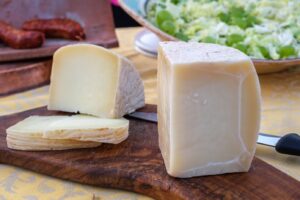 This is a sheep’s milk cheese with a golden rind, a symbol of authenticity and simplicity. Soft and flavourful, it was the accompaniment of choice for the humblest of meals, often served with nothing more than bread and onion: a modest meal, but one capable of providing genuine pleasure. Perhaps less well known than other cheeses from Basilicata, Tagliatizzo retains its authenticity, bearing witness to a long pastoral tradition that still lives on in local homes and on local tables today.
La Rafanata
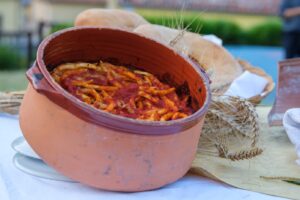 The queen of Lucanian cuisine, it is not a simple omelette, but a rich and complex baked pasta dish, fragrant and enveloping. Traditionally, the pasta, prepared with local eggs and flour, made its triumphant entrance on Shrove Tuesday evening, topped with cheese, horseradish and sauce, and was the star of the rituals that diners did not shy away from: observing the shadow of one’s head by turning around after the third forkful, turning one’s chair towards the fire in the fireplace and leaving one’s shadow to its fate, amid the hilarious “cosecoselle” to be listened to and guessed rather than told. Even today, every family prepares it with care, keeping a centuries-old tradition alive.
La Pastorale
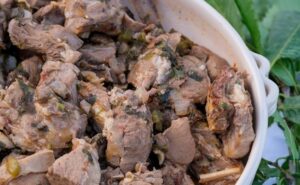 This dish embodies the simple, authentic spirit of pastoral cuisine. Prepared with lamb cooked slowly with onion, water and chilli pepper, it was born out of necessity and simplicity: in the past, old, injured or infertile sheep were used, transforming what remained of the flock’s life into precious nourishment. Even bandits, it is said, cooked it in the woods and along the trails.
La Nnuglia
 Enriched with pork rind, it is a small masterpiece of female ingenuity. From a simple and humble mixture, a salami with an unmistakable texture and intense flavour takes shape. The pre-cooked and finely chopped pork rind adds crunchiness and character, transforming every bite into a surprising experience. In the fireplaces of Castelsaraceno, the tradition of roasted Nnuglia is renewed every winter.
La Munnulata
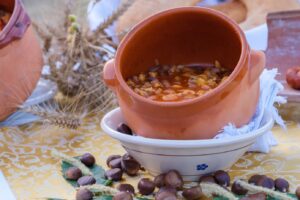 This soup exudes simplicity and rural traditions. Created from chestnuts, beans and potatoes, it evokes winter days when people drew on the supplies they had set aside after the harvest. Each step was a ritual of ancient gestures: careful cleaning, patient soaking, slow cooking that released warm and comforting aromas. Finally, garlic, oil and chilli pepper added character and intensity, transforming humble ingredients into a dish of extraordinary authenticity, capable of warming the body and heart.
“I L zit” salad
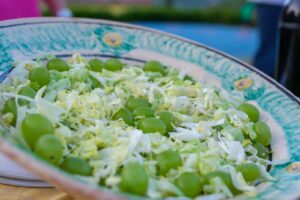 The newlyweds’ salad, a symbolic dish linked to traditional peasant wedding lunches. Prepared with raw savoy cabbage, grapes, a drizzle of oil and a pinch of salt, it brought freshness and lightness to the table on festive days. It was served in homes transformed for the occasion: rooms emptied of furniture, filled with chairs and crockery borrowed from neighbours, where entire communities gathered to celebrate the newlyweds. Simple in appearance, it embodies a long history of conviviality and sharing, as well as representing, perhaps unconsciously, a tribute to healthy and essential vegetable cuisine.
Il tortano
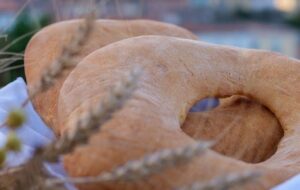 It is a generous and substantial ring-shaped bread, stuffed with cold cuts, cheese or the typical Nnuglia. Prepared for festive occasions, it brought the taste of celebration and the value of sharing to the table, becoming the centrepiece of family banquets. Every household passes down its own recipe, with variations jealously guarded and enriched with local ingredients. Thus, from a simple stuffed bread, Tortano has become an emblem of local home cooking: a blend of flavours, traditions and conviviality.
As the seasons pass and generations change, these dishes endure, resonating like ancient strings: in home kitchens, at festive lunches, in repeated gestures. And every time someone offers a slice of tortano or a plate of Munnulata, they are not just serving food, but also conveying memory, beauty and identity.
Even today, during “Pasquetta” (Easter Monday), at Bosco Favino on Ferragosto (15th August) or at the “Festa del Centro Storico” (Historic Centre Festival) on 13th August, these dishes take centre stage once again, bearing witness to an authentic link between past and present.